
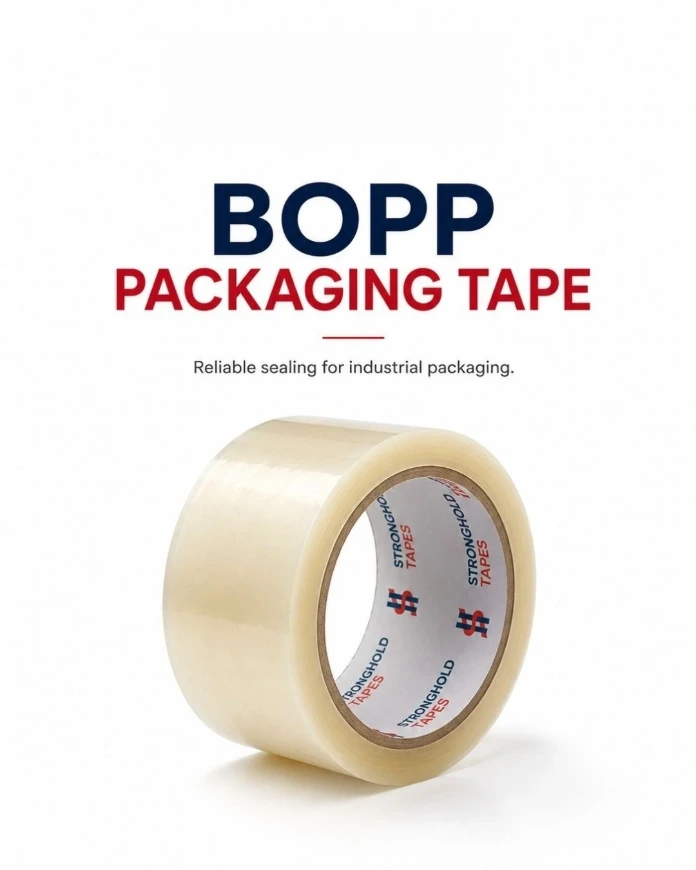
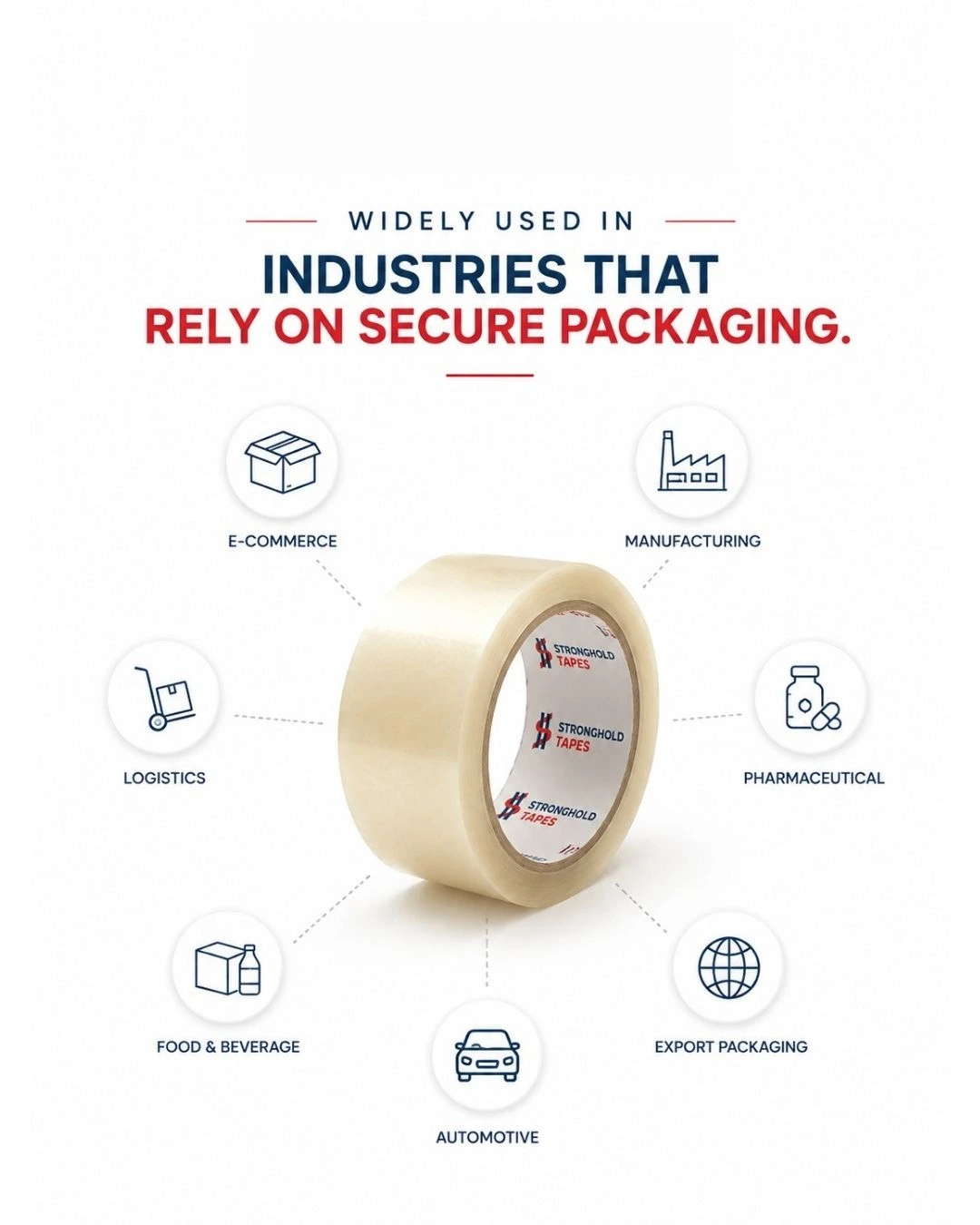
BOPP packaging tape is widely used to seal corrugated cartons across manufacturing, ecommerce, logistics, pharmaceutical, food and beverage, automotive and export operations.
However, two tape rolls that look similar may perform differently during packing, storage and transport. Reliable carton sealing depends on the combination of a durable BOPP film backing, a suitable acrylic adhesive layer, consistent roll construction and correct application.
This guide explains how BOPP tape is built, which features influence carton-sealing performance and what businesses should check before selecting tape for daily dispatch.
Why Packaging Tape Matters in Daily Dispatch
A tape roll may appear to be a small packaging component, but poor tape selection can create repeated operational problems: cartons opening during transit, workers applying extra layers, rolls breaking during fast packing and inconsistent packaging cost.
Secure Carton Closure
The tape must maintain contact with the carton flaps during storage, stacking, loading and transport. The carton surface, tape width, adhesive grade and application pressure all influence the final seal.
Faster Packing
Predictable unwind and dependable film strength help operators apply tape without frequent tearing, stretching or interruption. This is especially important where large numbers of cartons are sealed every day.
Consistent Packaging Cost
Stable roll length, adhesive coating, winding and repeat quality help businesses estimate tape consumption and calculate the actual cost per sealed carton.
What Is BOPP Packaging Tape?
BOPP stands for biaxially oriented polypropylene. In packaging tape, this material forms the film backing that gives the tape its structure and strength.
An adhesive layer is coated onto one side of the BOPP film. When the tape is pressed onto a suitable corrugated surface, the adhesive makes contact with the carton and helps hold the flaps closed.
BOPP tape is mainly used for:
· Corrugated carton sealing
· Box closure
· Dispatch packing
· Packaging reinforcement
· Ecommerce shipment preparation
· Industrial and export carton packing
It is commonly available as transparent, brown or printed packaging tape. The suitable version depends on the carton, application method, storage conditions and dispatch route.
Common Names Used by Buyers
BOPP packaging tape may also be called:
BOPP tape, packing tape, carton-sealing tape, box-sealing tape, parcel tape, transparent tape, brown tape or “2-inch tape” in common Indian buying language.
The Science Behind Every BOPP Tape Seal
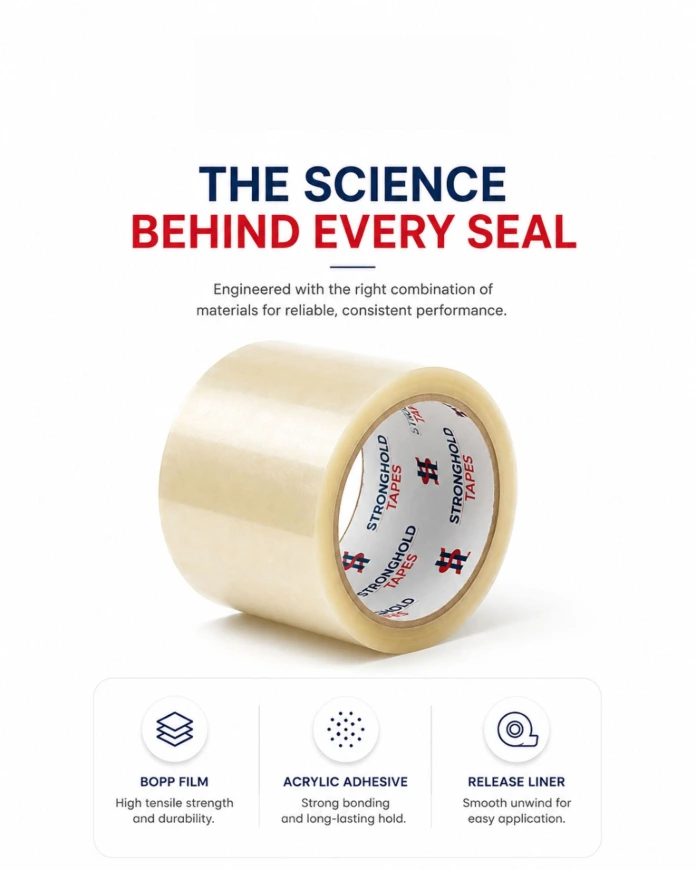
Reliable carton sealing comes from combining a strong film backing with an adhesive formulated to make contact with the carton surface.
The two layers perform different functions:
· The BOPP film must withstand normal pulling, unwinding and handling forces.
· The adhesive must establish sufficient contact with the corrugated board.
Both layers must work together. A strong film with the wrong adhesive may not hold the carton. A high-tack adhesive on a weak or inconsistent film can create tearing and application problems.
Tape performance is also affected by:
· Carton surface quality
· Dust and loose paper fibres
· Application pressure
· Tape width
· Total tape specification
· Temperature and humidity
· Storage period
· Manual or machine application
The right packaging for the job therefore starts with understanding the complete sealing condition—not only the appearance or roll price.
How BOPP Packaging Tape Is Built in Two Layers
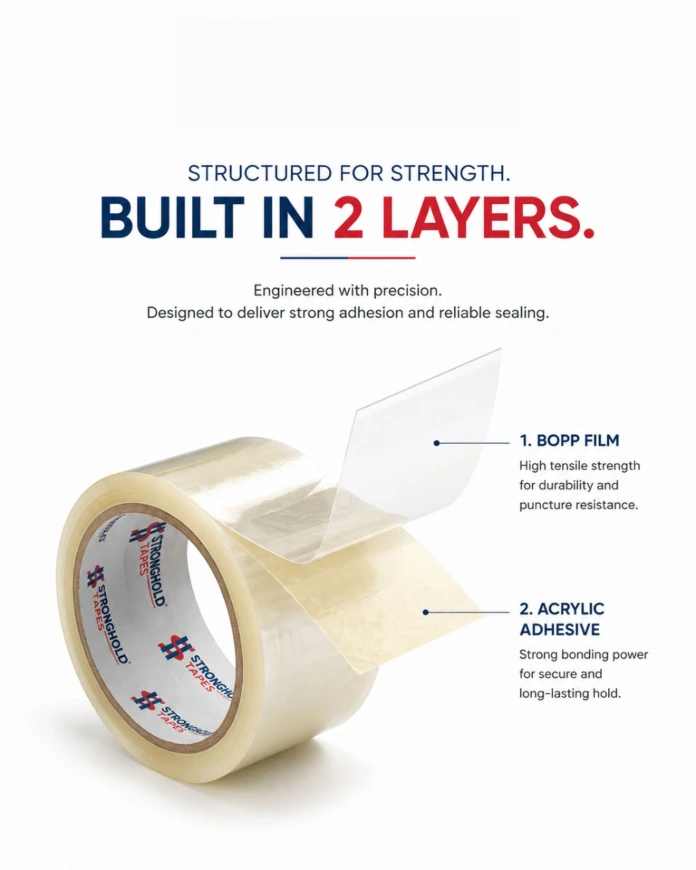
Stronghold BOPP packaging tape is presented as a two-layer carton-sealing material:
1. BOPP film backing
2. Acrylic adhesive layer
Layer 1: BOPP Film
The BOPP film gives the tape its physical structure. It supports:
· Tensile strength
· Durability during application
· Resistance to normal tearing and splitting
· Transparent or coloured appearance
· Printing where branded tape is required
· Smooth handling through manual dispensers or suitable equipment
The backing must unwind and tolerate normal pulling force without creating frequent breakage during packing.
Layer 2: Acrylic Adhesive
The acrylic adhesive creates the bond between the tape and the corrugated carton.
Its performance depends on sufficient surface contact and application pressure. The adhesive must also be matched to the carton surface, storage conditions and expected handling cycle.
Even suitable adhesive may underperform when the carton is dusty, damp, highly recycled, uneven or sealed without enough pressure.
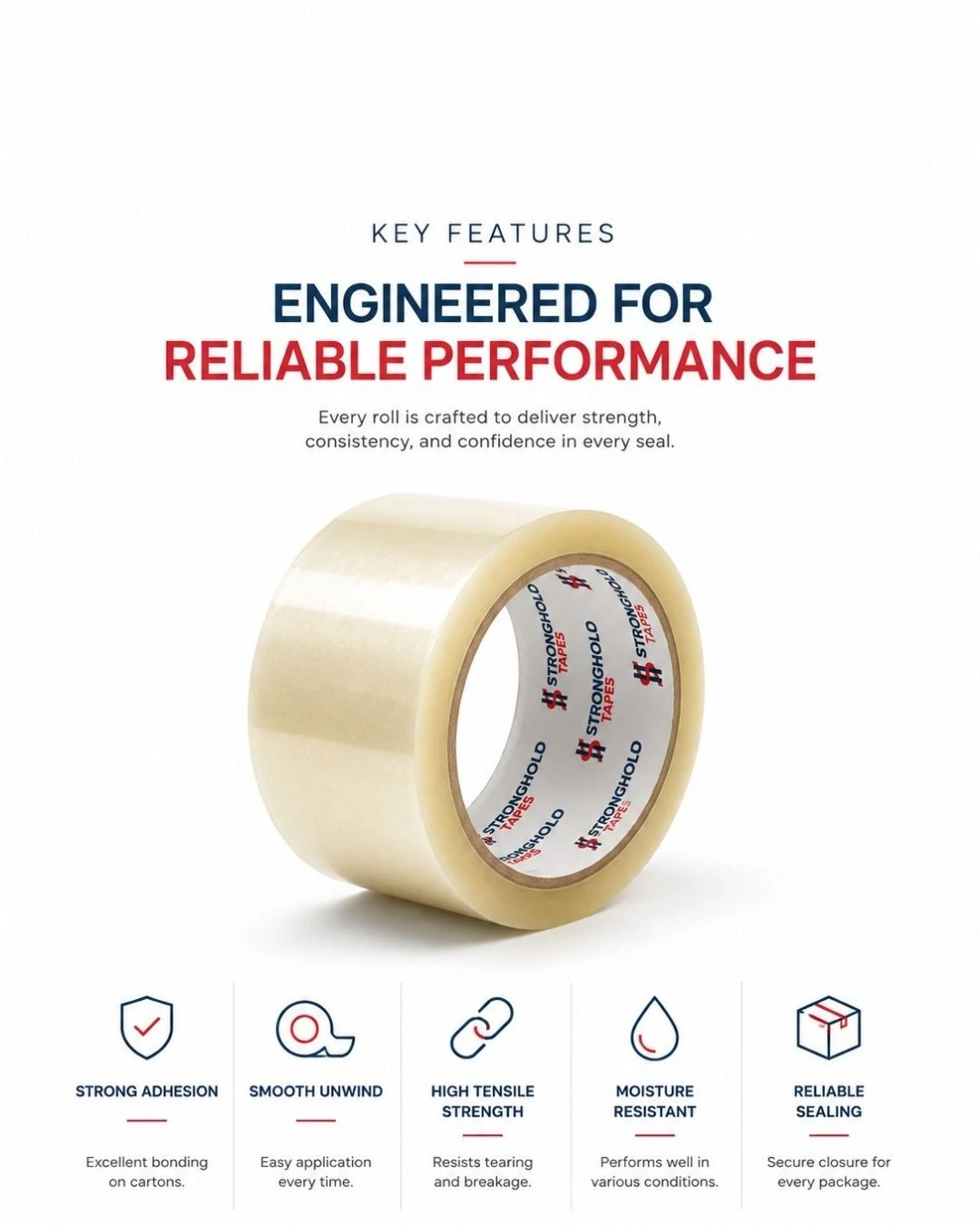
Key Features of Reliable BOPP Packaging Tape
Strong Adhesion
The adhesive should establish sufficient contact with the carton surface and hold the flaps under suitable packing and storage conditions.
Adhesion may be reduced by dust, moisture, rough recycled board, insufficient pressure or an unsuitable tape grade.
Smooth Unwind
Controlled unwind can help operators apply tape faster and more consistently. It also supports easier dispenser use and reduces unnecessary stretching, tearing and worker frustration.
High Tensile Strength
The BOPP film backing should withstand normal application force without splitting or breaking repeatedly.
Tape should not, however, be selected for demanding cartons based only on a general “high strength” claim. The complete specification must match the carton and dispatch condition.
Moisture Resistance
The BOPP film helps resist normal moisture exposure. Overall carton-sealing performance still depends on the adhesive, carton surface, humidity, application quality and storage duration.
This should not be presented as a waterproof carton seal.
Reliable Sealing
Reliable sealing is the combined result of:
· Correct tape specification
· Suitable carton surface
· Adequate tape width
· Proper application pressure
· Consistent film and adhesive coating
· Stable repeat-order quality
Common Carton-Sealing Problems and What to Check
Packaging problem | What the buyer should check |
Tape lifts after sealing | Carton dust, board surface, adhesive grade and application pressure |
Carton opens during transit | Packed weight, flap stress, tape width, sealing pattern and adhesive suitability |
Tape breaks during packing | Film strength, total specification, unwind force and dispenser blade |
Workers struggle to unwind the roll | Roll winding, unwind control and dispenser condition |
Machine roll jams | Core quality, winding consistency, roll dimensions and equipment compatibility |
Performance changes between orders | Width, thickness, adhesive coating, usable length and supply consistency |
Roll finishes earlier than expected | Actual usable roll length and tape consumption per carton |
Printed tape fades or smudges | Printing method, ink quality, rubbing exposure and storage conditions |
A recurring carton-sealing problem should not automatically be solved by adding more layers of tape. The underlying cause may be the carton surface, tape specification, equipment condition or application method.
How to Choose the Right BOPP Tape
Selection factor | Information required |
Carton weight | Approximate packed-box weight |
Carton surface | Virgin, recycled, rough, dusty, coated or printed board |
Tape width | Width needed to cover the carton seam adequately |
Tape specification | Film thickness, adhesive coating and total construction |
Adhesive system | Acrylic or another application-specific adhesive |
Application method | Hand application, tape dispenser or carton-sealing equipment |
Packing speed | Occasional packing or continuous dispatch |
Storage environment | Indoor, humid, hot, cold or extended storage |
Transit condition | Local delivery, ecommerce, repeated handling or export |
Appearance | Transparent, brown or printed |
Roll format | Hand roll, machine roll, slit roll or another required format |
Consumption | Usable metres and cost per sealed carton |
Do Not Select Tape Only by Roll Price
Two rolls may have a similar appearance but differ in usable length, film construction, adhesive coating, winding and unwind quality.
A lower roll price may not reduce packaging cost when it causes:
· Additional tape layers
· More roll changes
· Packing interruptions
· Carton-opening complaints
· Repacking labour
· Higher consumption per carton
For a practical comparison, evaluate the number of cartons sealed per roll and the consistency of the sealing result—not only the purchase rate.
BOPP Tape Options for Different Packaging Requirements
Transparent BOPP Tape
Suitable for general carton sealing where labels, barcodes or printed carton information should remain visible.
Brown BOPP Tape
Commonly used on standard corrugated cartons where a brown tape finish is preferred for regular industrial packaging.
Printed BOPP Tape
Can support:
· Brand identification
· Handling instructions
· Shipment identification
· Product-specific communication
· Visible indication if the seal has been disturbed
Printed tape should not be described as completely tamper-proof.
Machine-Grade BOPP Tape
Intended for carton-sealing operations where roll winding, core dimensions, unwind behaviour and equipment compatibility require closer control.
Implementation note: Publish only the variants and formats confirmed in Stronghold’s approved product range.
Industries That Use BOPP Packaging Tape
Ecommerce and D2C
Used for marketplace orders, fulfilment-centre dispatch, return shipments and branded shipping cartons.
The priority is fast application, a clean package appearance and fewer carton-opening complaints.
Manufacturing
Used for finished goods, spare parts, components, dealer shipments and factory dispatch cartons.
Selection should consider carton weight, handling frequency and whether packing is manual or mechanised.
Logistics and Warehousing
Used for parcel sealing, hub-level repacking, carton consolidation and warehouse dispatch.
Smooth unwind and consistent roll performance become important where cartons are handled repeatedly.
Pharmaceutical
Used for secondary cartons, distributor shipments and medicine-box dispatch.
Printed options may support handling instructions, identification or internal packaging controls where required.
Food and Beverage
Used for secondary packaging and cartons containing packaged food or beverage products.
The tape should be selected according to storage conditions, carton surface and handling cycle.
Automotive
Used for spare parts, accessories, components and aftermarket product cartons.
The tape specification should match the carton weight and the number of handling stages before delivery.
Export Packaging
Export cartons may experience longer storage, repeated loading, stacking and multiple handling cycles.
Tape selection should therefore consider carton construction, packed weight, route, climate exposure and the full export-packaging system.
BOPP Tape Specifications Buyers Should Confirm
Before requesting a quotation, confirm as much of the following information as possible:
Product details | Application details |
Tape colour | Carton type and surface |
Required width | Approximate packed-carton weight |
Required roll length | Manual or machine application |
BOPP film specification | Packing speed |
Total tape specification | Storage environment |
Adhesive type | Local, long-distance or export dispatch |
Core internal diameter | Current carton-sealing problem |
Unwind requirement | Monthly consumption |
Printing requirement | Delivery location |
Rolls per carton | Required supply frequency |
MOQ requirement | Sample or trial requirement |
Actual thickness, adhesion, tensile strength, shelf life or other performance values should be published only after confirmation from the approved product specification or technical datasheet.
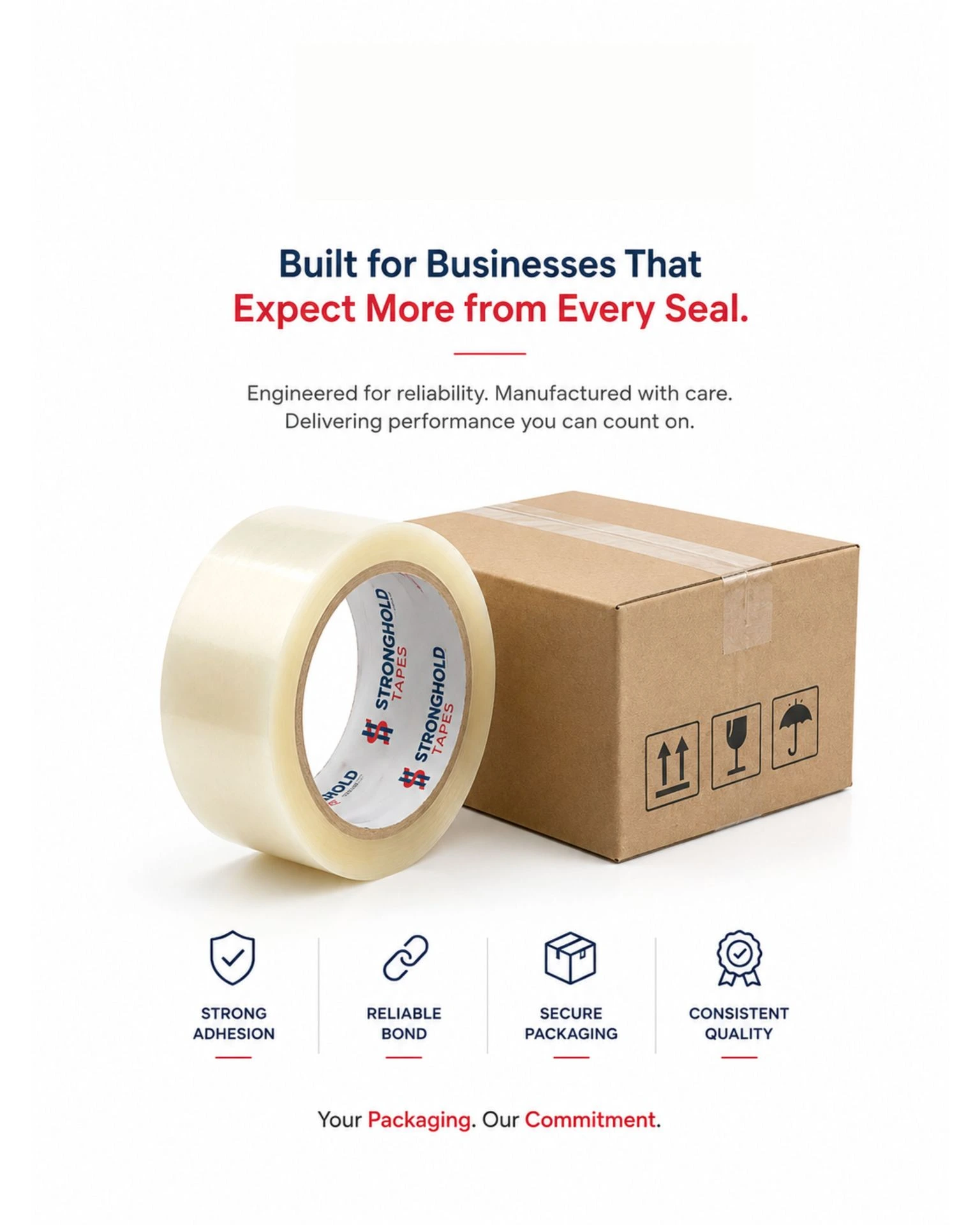
Built for Businesses That Expect More from Every Seal
Stronghold Packaging helps businesses select BOPP tape according to the carton, packing method, operating environment and dispatch condition.
The objective is not to recommend one tape for every box. It is to identify the right packaging for the job, maintain consistency in supply and reduce the operational hassle caused by repeat taping, breakage and sealing complaints.
Strong Adhesion
Tape recommendation based on the carton surface and sealing requirement.
Reliable Bond
Better sealing through suitable product selection, carton preparation and application pressure.
Secure Packaging
Appropriate tape width and specification based on the carton and dispatch route.
Consistent Quality and Supply
Stable repeat-order specifications, roll dimensions, winding and adhesive construction help reduce unwanted changes between supplies.
Continue Your Packaging Selection
BOPP Tape Options
· BOPP Packaging Tape
· Transparent BOPP Tape
· Brown BOPP Tape
· Printed BOPP Tape
· Machine-Grade BOPP Tape
Helpful Guides
· Acrylic vs Hot-Melt BOPP Tape
· Why Carton Tape Opens During Transit
· Brown vs Transparent BOPP Tape
· 48 mm vs 72 mm Packaging Tape
· How to Reduce Tape Consumption per Carton
Related Packing Equipment
· BOPP Tape Dispenser
· Carton-Sealing Equipment
· Packaging Cutters
Only activate links when the relevant destination page is published.
Get the Right BOPP Tape for Your Cartons
Share your carton type, approximate packed weight, current tape size, application method and monthly requirement.
Stronghold Packaging will review the requirement and help identify a suitable transparent, brown, printed or machine-compatible BOPP tape option.